
The Ageless Ballet Blueprint
From Frumpy to Fierce at the Barre
The Adult Beginner's Complete Guide to Mastering Ballet Barre, Finding Your Ballerina Identity, and Transforming Your Body at Any Age

By Christina Cabral
with Maestro Matteo Corbetta, La Scala di Milano
Table of Contents
Part I: The Shame That Keeps You Out
03Part II: The History of Ballet
07Part III: The Ageless Barre Method
12Part IV: The Ballerina Identity Framework
28Part V: Your Next Steps
35Part I
The Shame That Keeps You Out
The statistics would surprise you. Research into adult dance participation shows that the number one reason adult women don't start ballet isn't their body, age, or flexibility. It's shame.
Not shame about ballet itself — shame about being a beginner. Shame about not already knowing things that feel like everyone else knows. Shame about moving awkwardly, having arms that don't know what to do, and plié-ing when everyone else is already doing pirouettes.
- ·Feeling frumpy in ballet clothes when your body doesn't look "ballet."
- ·Not knowing what to do with your arms — and feeling like everyone can tell.
- ·Starting classes and quitting because the teacher assumes you already know the vocabulary.
- ·Comparing yourself to 20-year-olds who seem to float effortlessly.
- ·Years of watching ballet and thinking "someday" — but someday never comes.
The truth?
The problem is not your body. The problem is not your age. The problem is not your flexibility. The problem is that no one has ever taught you the actual foundation — the mechanics, the alignment, the intention behind each movement. Once you have that, everything changes.
Let's do some math that might change everything for you.
If you've been wanting to do ballet for even five years — that's 260 weeks of not feeling the way you could feel. Not standing the way you could stand. Not carrying yourself with the elegance you already have inside you.
But the real cost goes deeper than time. Every year you wait is another year your body doesn't receive the profound benefits of classical ballet:
- Deep postural correction that changes how you look in every outfit you own.
- The proprioception (body awareness) that makes you move differently in everyday life.
- The bone density and muscle tone that becomes critical in your 40s, 50s, and beyond.
- The mental health benefits of ritual, discipline, and beauty in your weekly routine.
- The identity of someone who takes herself seriously enough to invest in elegance.
The good news: you can start now. Today. With this blueprint in hand.
Part II
The History of Ballet
Ballet was born in the Italian Renaissance courts of the 15th century, but it was the French court of King Louis XIV that transformed it into the art form we recognize today. Louis XIV himself was an accomplished dancer who performed publicly until age 30, and in 1661 he established the Académie Royale de Danse— the world's first formal ballet academy, in Paris.
The five positions of the feet that are the foundation of everything you will learn were codified by Pierre Beauchamps, Louis's court choreographer. The very words we use — plié, tendu, arabesque, port de bras — are French, because French was the international language of culture, and ballet was the most cultured thing imaginable.
A Timeline of Ballet
The Paris Opera Ballet remains the most prestigious ballet company in the world. It was here that the tutu was invented, where the romantic ideal of the ethereal ballerina was born, and where the vocabulary you are about to learn was refined over centuries. When you do a plié, you are connected to 400 years of human elegance. Remember that.
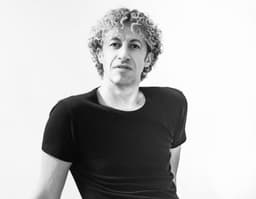
Born in Brescia, Italy, Matteo began dancing with the “Società Forza e Costanza” under teacher Tina Belletti. In 1990, he went on to study at the Scuola di Balletto Classico Cosi-Stefanescu in Reggio Emilia, graduating in 1994. In 1995 he was accepted into the prestigious Teatro della Scala in Milan.
He proceeded to dance with several Italian companies including the Compagnia Veneta di Balletto Classico, the Corpo di ballo dell'Arena di Verona, and MM Company. In 2004 he began the Kormat Dance Company, which has performed throughout Europe and on television.
- American Ballet Theatre National Training Curriculum certified — Primary through Level 7 + Partnering
- Regular guest teacher in New York City at Kat Wildish's classes
- Inventor of the Kormat Method Floor Barre — a revolutionary approach to ballet alignment
- Professional singer, choreographer, and producer of shows throughout Europe
- In Matteo's own words: "Ballet is not about performance. It's about transformation."
Part III
The Ageless Barre Method
Everything in ballet is built on five positions. Before you do a single exercise, you need to understand these positions deeply — not just where to put your feet, but why. The why is what Matteo teaches. The why is what most teachers skip.
First Position
Première PositionFeet
Heels together, toes turned out to the sides. The turnout comes from the hip — never force your feet beyond what your hip allows.
Arms (Port de Bras)
Arms form a soft oval in front of the body at navel height. Elbows soft, wrists alive, fingers gently curved. This is called en bas (low).
Maestro's Key
Never force turnout. 90° total (45° each foot) is enough to begin. Forcing turnout causes injury and ugly compensations.
Second Position
Deuxième PositionFeet
Feet apart (approximately one foot-length), heels still aligned, same turnout as first.
Arms (Port de Bras)
Arms open to the sides at slightly below shoulder height. Imagine holding something delicate — a sphere of soft air. Palms slightly forward.
Maestro's Key
The arms in second position are one of the most recognizable shapes in all of ballet. Make them beautiful: lifted, alive, never drooping.
Third Position
Troisième PositionFeet
One foot placed in front of the other, heel of front foot at the middle of the back foot. Rarely used in advanced ballet but excellent for beginners.
Arms (Port de Bras)
One arm en bas (first), one arm à la seconde (second). The bridge between first and fourth.
Maestro's Key
Third position is your friend as a beginner. It gives you the feeling of crossed feet without the strain of fifth.
Fourth Position
Quatrième PositionFeet
One foot in front of the other, approximately one foot-length apart, both feet turned out. Front foot directly in front of back foot.
Arms (Port de Bras)
One arm in first position (rounded in front), one arm in second (to the side). Or both arms in first — called quatrième devant.
Maestro's Key
Fourth position is where most of your balances begin and end. Learn it precisely. A sloppy fourth position means a sloppy pirouette.
Fifth Position
Cinquième PositionFeet
One foot directly in front of the other, heel of front foot at toe of back foot. The most demanding position for your turnout.
Arms (Port de Bras)
Both arms raised overhead in a soft oval — en haut (high). This is the position of arabesque, attitude, and virtually every port de bras.
Maestro's Key
Fifth position is the destination, not the starting point. Work toward it. A beautiful, honest fourth is better than a forced, ugly fifth.
A classical ballet barre follows a specific sequence — not arbitrary, but architecturally designed. Each exercise warms up the body in a specific way and prepares you for the next. This is the sequence Matteo uses, adapted for adult beginners. Follow it in order, every time.
Pliés
Battements Pliés
The plié (meaning 'bent') is the foundational movement of ballet. Every jump begins and ends with a plié. It warms the knees, hips, and ankles, and establishes the turnout that everything else is built on. A perfect plié is not just about bending — it's about the resistance of the floor as you rise.
Maestro's Tips:
- ◆Keep your back perfectly upright — if you're leaning forward, your turnout is too forced.
- ◆In grand plié (full bend), heels rise in first and fifth but stay down in second.
- ◆Press the floor away from you as you rise — don't just stand up, push up.
- ◆Think of your kneecap tracking directly over your second toe.
- ◆Breathe: inhale as you descend, exhale as you rise.
Tendus
Battements Tendus
Tendu means 'stretched.' Starting in first or fifth position, you slide your foot along the floor until your heel lifts and only your pointed toe touches the ground, then slide it back in. This exercise is the foundation for footwork, articulation, and all of the small jumps (petit allegro) you will eventually learn.
Maestro's Tips:
- ◆The working foot must be fully stretched — metatarsals, arch, and toes all engaged.
- ◆The supporting leg stays absolutely still and straight. No shifting of the hips.
- ◆Brush the floor with your foot — don't lift it, slide it.
- ◆Your arms remain in their position. Arms don't move when legs do (until they're supposed to).
- ◆Quality over speed — one beautiful tendu is worth ten sloppy ones.
Dégagés
Battements Dégagés / Jetés
Dégagé means 'disengaged.' Like a tendu, but the foot lifts slightly off the floor (approximately 2-4 inches). This is the exercise that trains the quick, sharp footwork needed for jumps. It is done faster than tendus — the speed develops the muscular memory that makes allegro (jumping) possible.
Maestro's Tips:
- ◆Only the foot lifts — the hip stays absolutely level. Never hike the hip to get height.
- ◆The accent is on the way out — sharp and quick. The return is controlled but fluent.
- ◆Point through the toes fully, even at this small height.
- ◆Think of flicking the floor — not lifting from above.
Rond de Jambe à Terre
Rond de Jambe à Terre
Rond de jambe means 'circle of the leg.' À terre means 'on the ground.' Your working foot traces a semicircle on the floor — from front (through first position) to side to back, or in reverse. This exercise is specifically for hip rotation and opening — it is what creates the beautiful turnout that defines ballet posture.
Maestro's Tips:
- ◆The circle passes through first position every time — through, not shortcutting.
- ◆Work from the hip, not the ankle. The rotation is initiated in the socket of the hip joint.
- ◆Keep the foot pointed throughout the sweep — especially at the back.
- ◆Your upper body stays completely still. This exercise is only about the working leg.
Frappés
Battements Frappés
Frappé means 'struck.' Starting with your foot at your ankle (cou-de-pied position), you strike the floor sharply and extend the leg to a low height, then return. Frappés develop the explosive power used in jumps and the precision needed for petit allegro. They also train the crucial cou-de-pied position used in many advanced steps.
Maestro's Tips:
- ◆The strike should be sharp and precise — not a gentle brush but a definite contact.
- ◆The working foot wraps around the ankle in cou-de-pied before each strike.
- ◆Extend to only 25-45 degrees — this exercise is about precision, not height.
- ◆Keep the standing knee absolutely straight during extension.
Fondus
Battements Fondus
Fondu means 'melted' — and that describes exactly how it feels. You simultaneously bend (plié) the standing leg while drawing the working foot to cou-de-pied, then simultaneously extend both legs as you extend the working leg to 45 degrees. Fondus develop the smooth coordination and timing needed for all jumping work.
Maestro's Tips:
- ◆Both actions must be simultaneous — the standing plié and the working foot close happen together.
- ◆The melt is gradual and controlled. No sudden drops.
- ◆On the extension, feel the energy pour from your hip through the tips of your toes.
- ◆This is one of the most musical exercises in the barre — listen to the music and let it guide your timing.
Adagio / Développés
Adagio — Battements Développés
Adagio means 'slowly.' A développé is a slow unfolding of the leg from a closed position through cou-de-pied and passé, to a fully extended and elevated position. This is the most demanding barre exercise and the one most closely associated with the iconic image of a ballerina — leg extended at 90 degrees or above, body perfectly still.
Maestro's Tips:
- ◆The leg unfolds like a flower — cou-de-pied, passé (knee up beside ear), extension. Never skip the passé.
- ◆Support the extension with the core. If your back is arching, your core is not working.
- ◆The goal is not height — the goal is alignment. A beautiful développé at 45° beats an ugly one at 90°.
- ◆Look at something still. Your balance will follow your eyes.
Grand Battements
Grands Battements
Grand battement means 'large beat.' Your working leg sweeps powerfully from fifth position to a high elevation — as high as your turnout and flexibility allow — then closes back through first. This is the final exercise of the barre for a reason: you are now fully warmed up, and this final sweep of the leg prepares you for the big movements of center work.
Maestro's Tips:
- ◆The power is on the way up — the descent is controlled, not dropped.
- ◆The standing leg stays straight and the hip stays down — no tilting.
- ◆The working foot passes through first position on the way to every direction.
- ◆Think of throwing the leg to the sky and then catching it gracefully.
- ◆The higher the leg, the more the core must work to keep the back from compensating.
The Kormat Floor Barre is Matteo's invention — a revolutionary approach to ballet training that takes place lying on the floor. Without the distraction of balance, gravity, and standing position, the body can focus entirely on rotation, alignment, and the muscular engagement that makes ballet posture possible.
Why Floor Barre Works
When you do pliés standing, you're simultaneously managing balance, alignment, turnout, and the movement itself. Floor barre removes balance from the equation entirely. Your brain and body can focus purely on rotation, articulation, and the muscular memory that eventually becomes second nature standing. Many professional dancers use floor barre to reinforce technique they've been doing for decades. For an adult beginner, it is transformative.
- Lying on your back: port de bras (arm circles) in all five arm positions
- Lying on your back: leg rotations to reinforce hip turnout without gravity
- Side-lying: battements (tendus and dégagés) working the hip abductors
- Side-lying: grand battements — the full sweep with no balance required
- Seated: back stretches and port de corps (body bends) for spine articulation
- All exercises done on both sides, maintaining the pelvis in neutral throughout
Part IV
The Ballerina Identity Framework
This is not about vanity. This is about identity. When you put on a leotard, you are making a declaration: I am a dancer. I take myself seriously. I have claimed this part of myself.
I put on my cat-eye stickers. White eyeliner on the waterline. A leotard that fits properly. Ballet slippers tied with care. This is my ritual. It is my signal to my brain that we are entering a different world — the world of the barre, where I am elegant, disciplined, and becoming.
The Ballerina Wardrobe Essentials
- A fitted leotard — any color, any style. It must be fitted. Loose clothes hide your alignment from you and your teacher.
- Ballet pink tights — not opaque, not athletic. Pink. The line of the leg is part of the aesthetic.
- Ballet slippers — soft leather or canvas. Properly fitted (snug, not tight). Pink for women.
- Hair up and off the face — a bun is traditional and practical. Even a simple bun changes how you hold your neck.
- A light wrap skirt (optional) — for the 'dressing up' element that makes the ritual feel special.
- Something beautiful for your face — whatever makes you feel like your best self. For me, it's my cat-eye.
The most powerful thing about ballet is not the movement. It is the ritual. The ritual of arriving, changing, warming up, working, cooling down. The ritual of doing the same sequence week after week and watching yourself get better in ways that are subtle but undeniable.
Christina's Pre-Barre Ritual
- Change into your ballet clothes — fully, properly, beautifully.
- Do your hair and face. You are stepping into a different version of yourself.
- 5 minutes of walking, breathing, arriving in your body.
- Gentle warm-up: ankle circles, hip circles, shoulder rolls, neck release.
- Stand at the barre. Feel the wood under your hand. Breathe once.
- Begin.
Part V
Your Next Steps
Reading this and doing this are two different things. I know, because I tried for years to piece together my ballet education from YouTube videos and drop-in classes where no one had time to correct me. It wasn't until I found Matteo that everything clicked.
The Ageless Ballet Academy is the place where you don't just learn this method — you master it, with Matteo teaching you live every week and a global community of adult women supporting you every step of the way.
What You Get in the Academy
- Weekly live barre classes with Maestro Matteo Corbetta
- The Kormat Floor Barre Method — full access to all levels
- Monthly masterclasses on specific techniques (arabesque, pirouettes, port de bras)
- Access to our private global community of adult ballet beginners
- Christina's ongoing content: stories, inspiration, and the Ballerina Identity journey
- Video replays of all classes — never miss a session
$250 / month
or $2,500 / year (save $500). Everything included. Cancel anytime.
Join the AcademyNot ready yet? Stay on this email list. Christina emails personally with stories, tips, and inspiration to keep you moving toward the barre.